
A beautifully printed brochure, premium business card or piece of direct mail creates a different experience from an email or online advert. It becomes something the recipient can pick up, hold and interact with.
Research suggests this physical interaction can influence how people process, remember and respond to marketing – helping businesses create a stronger and more lasting impression.
Why touch matters in marketing
When we handle an object, we experience its texture, weight, shape and quality alongside everything we can see.
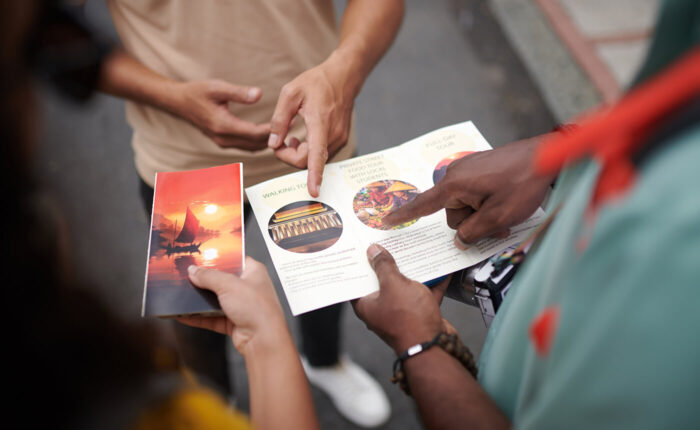
Consider the difference between viewing a brochure online and receiving a professionally printed copy. On screen, you experience the design visually. With print, you also feel the paper, experience its finish and physically turn the pages.
Those details become part of the impression the brand creates.
What does the research tell us?
UK research suggests physical marketing can influence how people process and remember communications.
Royal Mail MarketReach and neuroscience research company Neuro-Insight compared responses to mail, email and social media advertising. Mail produced a 49% stronger long-term memory encoding response than email and a 35% stronger response than social media advertising. It also generated a 33% stronger engagement response than email and a 35% stronger response than social media.
You can read more in Royal Mail MarketReach’s Why Mail Cuts Through research report.
MarketReach’s The Private Life of Mail also explored the physical and emotional characteristics of mail and how touch can influence people’s responses.
The message for marketers is clear: how something feels in the hand can contribute to how the communication – and the brand behind it – is experienced.
Touch can create a sense of ownership
Consumer behaviour researchers Joann Peck and Suzanne Shu investigated the effect of “mere touch” on perceived ownership.
Their research, published in the Journal of Consumer Research, found that simply touching an object could increase feelings of perceived ownership and explored how this could influence its perceived value.
For marketers, it highlights an important difference. Physically handling a brochure, catalogue, sample or piece of packaging creates an interaction that isn’t quite the same as viewing something fleetingly on a screen.
A brochure can be designed to be touched
One of the great advantages of print is that the material itself can become part of the message – and a brochure offers plenty of opportunities to create a tactile experience.
Paper choice is just the start. Foiling can introduce contrast and a sense of quality. Embossing or debossing adds a physical dimension. Laminations and specialist coatings change how a cover feels, while die-cutting can introduce unexpected shapes, edges and reveals.
Even choosing between smooth, textured, coated or uncoated paper can change the character of the finished piece.
Used thoughtfully, these embellishments can draw attention to particular elements, reinforce a brand’s personality and make a brochure more distinctive.
Royal Mail and Brass Insight tested this idea by introducing physical features to direct mail for five fictional brands. Features such as foiling, die-cutting and embossing were found to hold consumers’ attention for longer and make the communications easier to understand.
More isn’t necessarily better. The most effective brochures use print finishes with purpose. A subtle deboss might suit an understated luxury brand, while a striking foil could help a product launch demand attention.
At Kall Kwik, we can help businesses explore how paper stocks, foiling, embossing, debossing, lamination and specialist finishes can turn a brochure from something people simply read into something they want to pick up and experience.
Physical marketing can stay around
Print has another advantage: it can remain in someone’s environment.
JICMAIL, the UK’s independent audience measurement body for mail, found that an average piece of direct mail receives 108 seconds of attention over 28 days.
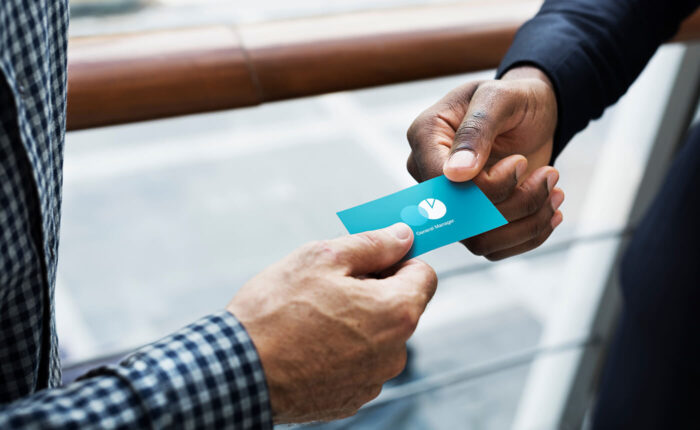
A brochure might sit on a desk. A leaflet can be put aside for later. A business card might remain in a wallet until a particular service is needed.
That ability to be picked up and returned to gives physical marketing a lasting presence that many digital communications simply don’t have.

Print and digital work better together
Businesses don’t have to choose between print and digital. Often, the strongest approach combines them.
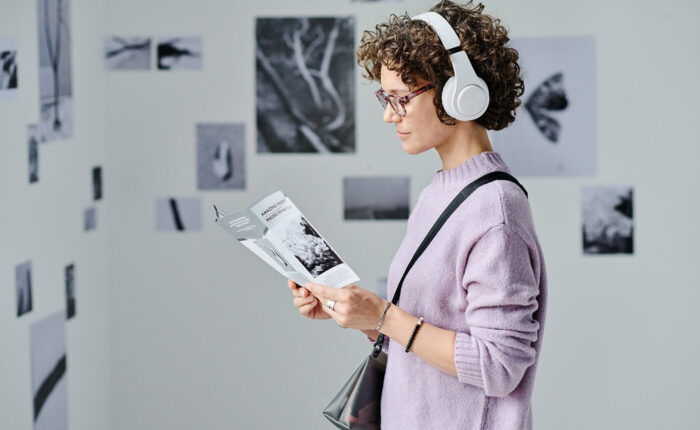
A brochure can direct customers to a website. Direct mail can include a QR code leading to a landing page. Event materials can connect visitors with digital content, while campaign-specific offers can help measure responses.
Print provides the physical experience, while digital makes it easy to take the next step.
Create marketing people want to pick up
Research into touch helps explain something people in print have long understood: how a communication feels can be part of how it communicates.
Paper, texture, weight, format and finishing aren’t simply production decisions. Used well, they can shape someone’s experience of your marketing and their impression of your brand.
For businesses across the UK, that creates an opportunity to produce marketing that doesn’t simply deliver a message – it invites people to interact with it.
If you’re planning a brochure, direct mail campaign, business cards or other printed marketing materials, contact Kall Kwik to discover how great design, carefully selected materials and professional print can create something customers will want to pick up, explore and remember.