
Dated posted: 7th October 2026 / Category: Marketing, Print
The power of personalisation – how to make every customer feel wanted
Think about the last time you walked into a favourite restaurant and the host greeted you by name. How did it make you feel?
It’s a small thing, but it changes the experience. You’re no longer just another customer walking through the door. You feel recognised rather than processed, and you are more likely to come back.
That is the power of personalisation.
The same principle applies to marketing. Customers are surrounded by messages every day, from emails and online adverts to leaflets, brochures and direct mail. When so much communication is competing for attention, a message that feels personally relevant has a much better chance of standing out.
And thanks to developments such as variable data printing, creating personalised marketing at scale is easier than many businesses might think.
Why personalised marketing matters
At its heart, personalisation is about treating customers as individuals rather than names in a database.
Consider two pieces of direct mail. One begins with a generic greeting and promotes the same offer to everyone. The other addresses you by name and contains an offer or message relevant to your interests, location or previous relationship with the business.
Which one are you more likely to read?
Personalisation can make marketing feel less like a mass communication and more like a conversation. It shows that a business understands something about its customer and has made an effort to communicate accordingly.
That relevance can help capture attention, strengthen customer relationships and encourage people to respond.
Go beyond adding a name
Adding a customer’s name to a letter, postcard or email is perhaps the most familiar form of personalisation, but it is only the beginning.
Depending on the information customers have shared with your business, marketing can potentially be tailored according to location, previous purchases, interests, customer type or their stage in the buying journey.
A retailer could highlight products related to an earlier purchase. A law firm might send different information to an established client and a new prospect. A business serving several locations could tailor the message or offer according to where the recipient lives.
The key is relevance. Good personalisation should make customers think, “This is useful to me”, rather than simply, “They know my name.”

What is variable data printing?
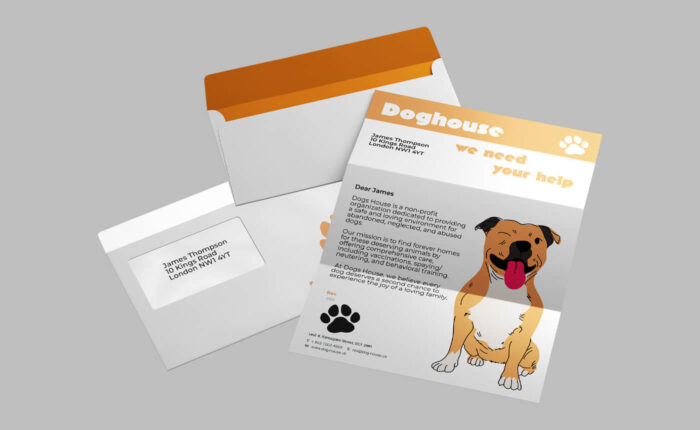
Variable data printing is one of the technologies that makes personalised print marketing possible.
It’s a clever way of personalising printed marketing at scale. It allows names, images, offers, messages and other elements to change automatically from one printed piece to the next. Rather than printing thousands of identical pieces, personalised printing allows certain elements to change automatically from one printed item to the next.
A direct mail campaign could therefore include each recipient’s name and address, but it can go much further. Headlines, offers, images, promotional codes, calls to action and other content can potentially change depending on who is receiving the piece.
Imagine a company mailing customers across several areas. Rather than sending everybody exactly the same leaflet, it could create different versions featuring information relevant to each recipient’s location. Alternatively, a retailer could feature different products based on customer segments or previous buying behaviour.
It combines the efficiency of a larger print run with the personal touch of individual communication.
Make your customer data work harder
Successful personalisation starts with good data.
Before launching a personalised print campaign, check that your customer information is accurate and up to date. Misspelt names, duplicate records and old addresses can quickly undermine the positive impression you are trying to create.
It is equally important to use customer information thoughtfully. Personalisation should feel helpful and relevant, not intrusive.
Segmentation is often an effective starting point. Instead of attempting to create a completely unique campaign for every individual, customers can be divided into meaningful groups based on factors such as location, purchase history, industry or interests.
This can provide much of the impact of personalisation while keeping the campaign practical and manageable.
Keep your brand consistent
Personalised content still needs to look and feel like your business.
Your logo, colours, typography, imagery and tone of voice should remain consistent, even when individual elements of the communication change. A carefully designed template provides the flexibility needed for variable content while protecting your brand’s overall identity.
At Kall Kwik we work with businesses in the UK combining creative design, marketing know-how and variable data printing to produce personalised marketing communications that make an impact.
Make customers feel recognised
Ultimately, good personalisation comes back to that restaurant experience.
The host does not need to know everything about you. Simply remembering your name can be enough to make the interaction feel warmer and more personal.
Marketing can work in much the same way.
At its heart, personalisation is about showing customers that you see them as individuals. When you speak to people in a way that feels relevant and considerate, they notice and they remember.
Start small, stay consistent and focus on the moments that matter most.
Ready to make your next campaign more personal? Get in touch with Kall Kwik today to find out how personalised print can help your business stand out.